Digital transformation in CRE isn't about buying more software—it's about every person in your company defaulting to a tech-first way of solving problems.
Organic social in CRE only works when it earns trust and adds real value—not when it's just noise for the sake of staying visible.
Templates make CRE marketing faster—but a badly designed template just multiplies bad design across everything your brand puts out.
With US office vacancy at a record 21%, winning tenants now comes down to storytelling and experience, not just listing square footage.
Real pipeline growth doesn't come from more ad spend—it comes from fixing the friction points in the journey you already have traffic going through.
Buyers build their shortlist before they ever contact you—miss any of five key things, and you're eliminated before the conversation even starts.
Every major platform's 2026 algorithm is optimizing for one thing: how long they can keep someone's attention—and CRE content needs to adapt or get buried.
After a thousand hours testing AI visibility, these are the seven concrete things that actually got a commercial real estate brand noticed by AI tools.
80% of buyers now research invisibly before ever reaching out—consideration, not leads, is becoming the metric that actually matters.
Heading into 2026, these are the tactics Josh and Dylan consider genuinely essential for CRE marketing—not just nice-to-haves.
The number one struggle CRE marketers report isn't leads or content—it's proving that marketing actually drives revenue.
The old-school contact form is dying—not because leads matter less, but because buyers want control over when and how they're contacted.
Content marketing isn't a buzzword—it's the long game that generates roughly 3x more leads than outbound, and CRE companies can't afford to skip it anymore.
Should a CRE company chase deals or build its brand? Josh and Dylan take opposite sides of the debate—and land on a surprisingly practical answer.
Views and followers look good on a dashboard, but engagement is the only social metric that actually signals someone is ready to act.
YouTube's new shoppable stickers are a small feature, but they point to a bigger shift: platforms are racing to make the buyer journey as frictionless as possible.
AI Overviews are the new SEO battleground—but Google's core business model of ads isn't going anywhere, it's just adding a new layer on top.
Property owners often have zero visibility into what brokers are actually doing with their leads—and that lack of transparency is quietly costing everyone deals.
Three things separate a listing that gets noticed from one that gets scrolled past: strong visuals, smart SEO, and actually reading your analytics.
Storytelling, not short-form video or AR gimmicks, is the marketing trend Josh and Dylan are genuinely excited about heading into 2025.
Whatever platform you're on, whatever AI tools you use, one thing determines success in 2025: authenticity.
A rundown of free courses—from Google Analytics to LinkedIn advertising—that Josh and Dylan actually recommend for leveling up a CRE marketing career.
Josh and Dylan answer eight real marketing questions pulled straight from Reddit—covering KPIs, video, brand identity, and AI.
After a year of using AI daily, the biggest lesson Josh and Dylan learned: use it to enhance your role, never to replace your own expertise.
Inbound marketing is building the most beautiful lemonade stand—so good that people walk in on their own, instead of shouting at them through a megaphone.
Attracting the right investor to an acquisition starts with knowing exactly who you're targeting—then building a website, content, and outreach around exactly what they need to hear.
Understanding exactly what your competitors are doing—their ads, SEO keywords, and content—is one of the most underused ways to grow market share.
Before planning next year's marketing, Josh and Dylan say the real first step is honestly reviewing what did and didn't work this year.
Five marketing trends Josh and Dylan are watching for CRE going into 2024: AI, first-party data, video dominance, privacy, and SEO's shift into video-search platforms.
From X's rocky rebrand to TikTok's new text posts to LinkedIn's suspiciously perfect engagement reports, Josh and Dylan break down the latest platform changes.
A rundown of practical video content ideas for CRE brokers—from client interviews to listing walkthroughs—that build credibility without needing expensive production.
Duke Long built his commercial real estate following over a decade of unfiltered, controversial commentary—and has strong opinions on why most CRE marketing content is still boring.
Influencer marketing has barely touched commercial real estate—which means the opportunity for early movers is enormous.
Max Fisher closes 70+ industrial real estate deals a year, almost entirely from inbound leads generated by TikTok and Google—no cold calling required.
Josh interviews Dylan on the award-winning campaign that took a new CRE tech company from zero brand awareness to nearly double its lead target in year one.
ChatGPT reached a million users in just five days—Josh and Dylan break down four practical, early ways to use it in commercial real estate.
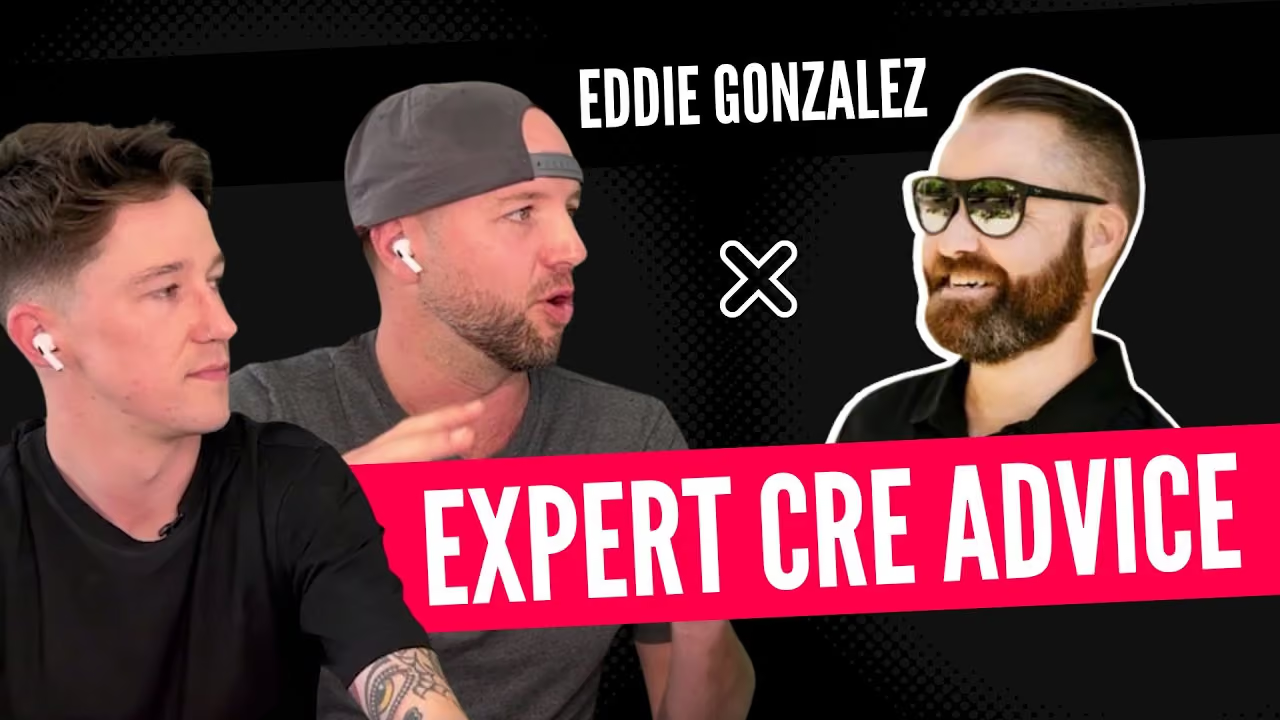
Eddie Gonzalez built a following doing "Tub Talk"—literally discussing commercial real estate from his bathtub—and it's generated real, qualified leads, including from a 70-year-old doctor.
Cutting marketing during a downturn feels safe—but Josh and Dylan argue it's exactly when competitors who stay visible pull ahead.
A CRM isn't just admin software—it's the connective tissue that lets marketing and sales actually see what's working and what isn't.
Kyle's advice for CRE professionals scared to start creating content: document, don't create—and stop worrying about ROI before you've even tried.
Not every listing needs professional photography—Josh and Dylan break down when the investment is worth it, and when a decent phone photo is genuinely fine.
SEO for commercial real estate comes down to a natural advantage: searches are already hyper-specific by location and property type—use that.
You don't need to be a natural on camera—Josh and Dylan break down three real examples showing different ways to get comfortable creating video content.
Cold emails are the hardest outreach method to get a reply from—but even ignored ones quietly build brand awareness over time.
Time-lapse video is one of the most engaging content formats in CRE, but it only works if you commit to planning it from day one of construction.
Animated explainer videos work brilliantly for B2B commercial real estate, but Josh and Dylan argue they're a reward for proven ROI, not a starting investment.
Suspiciously high, unexplained engagement from spam accounts led Josh to question whether LinkedIn is artificially inflating engagement numbers on paid content.
Should you heavily edit property photos to attract more inquiries? Josh and Dylan debate listing 'catfishing' and land on why honest storytelling wins.
Commercial real estate marketing is broadly boring, and Josh and Dylan argue that using metaphors and analogies to explain hard-to-grasp B2B concepts is the fix.
When the economy turns negative, should your marketing message follow suit? Josh and Dylan argue the real answer is simply better, more honest content.
A Reels video with double the likes of its actual view count raised a red flag, leading Josh and Dylan to question whether Instagram's engagement can be trusted.
A small minority of users produce nearly all Twitter activity, and Josh and Dylan argue most CRE companies should stop investing time in original Twitter content.
Turning a basic static post into a simple motion video is easier than it looks, and account manager Kate breaks down the actual process step by step.
A basic, unpolished TikTok video about converting a distressed retail space into warehouses earned 17,500 likes, proof that storytelling beats production value.
Drone footage elevates commercial real estate content dramatically, but Josh and Dylan warn against buying a cheap drone after losing one to the wind.
JLL put its logo on the entire side of a Las Vegas hotel at ICSC 2022, and Josh and Dylan break down what made their conference marketing stand out.
LoopNet's Instagram account skips the corporate feel entirely, and Josh and Dylan give it a rare high score for professional photography and clean design.
CBRE has nearly a million LinkedIn followers but surprisingly low engagement, and Josh and Dylan argue even industry giants aren't immune to boring content.
A listing packed with confusing acronyms like 'VPD' got Josh and Dylan's lowest content score yet, a reminder that not everyone speaks your shorthand.
Josh and Dylan screen-record an honest LinkedIn scroll to see what actually catches a marketer's eye, and what gets scrolled straight past.
Copy-pasted articles shared by dozens of accounts with identical wording tipped off Josh and Dylan to what looks like fake, coordinated influencer marketing.
When JLL posted a vague statement about their Russia ties during the Ukraine war, Josh and Dylan questioned whether corporate brands should weigh in on world events.
A broker explaining leasing jargon directly on camera earned high marks from Josh and Dylan, proof that educational, face-to-camera content builds real credibility.
A broker's vertical story-format post announcing a closed deal earned praise for authenticity, even with a lower score for format and missing audio.
A stunning drone-shot property video was undercut by a jarring, nature-documentary-style soundtrack that pulled Josh and Dylan's attention the wrong way.
A warehouse listing relying on a single, unremarkable photo earned a low score, and Josh and Dylan argue even a basic listing deserves more than one image.
A confident, well-shot one-minute walkthrough earned praise for execution, but only six LinkedIn engagements, proof organic reach alone isn't enough.
Sign up for practical CRE marketing insights, tools and updates from our team. No fluff, no spam, just useful thinking to help you market smarter.